
importance of circuit board impedance
Impedance is a fundamental electrical property of circuit boards that significantly affects the performance of electronic devices. It is a measure of the opposition that a circuit presents to the flow of alternating current (AC) at a particular frequency. Understanding and managing circuit board impedance is crucial for ensuring signal integrity, reducing electromagnetic interference (EMI), and optimizing the overall performance of electronic systems. This article explores the importance of circuit board impedance and its impact on various aspects of electronic design.
One of the primary reasons why circuit board impedance is important is its role in signal integrity. As electronic devices become more complex and data rates increase, maintaining the quality of signals transmitted across circuit boards becomes increasingly challenging.
High-speed signals can be distorted by reflections that occur when there is a mismatch between the impedance of the circuit traces and the impedance of the components they connect to. This mismatch can lead to signal loss, degradation, and timing errors, which can ultimately compromise the performance of the entire system. By designing circuit boards with controlled impedance, engineers can ensure that signals propagate smoothly, minimizing reflections and preserving the integrity of the data.
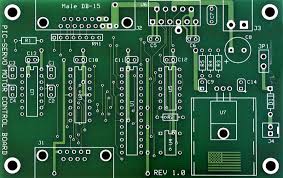
What is the importance of circuit board impedance?
Moreover, circuit board impedance is vital in the context of high-frequency applications. In modern electronic devices, signals often operate at radio frequencies (RF) or microwave frequencies, where impedance plays a critical role. For instance, in RF applications, transmission lines are commonly used to connect various components, such as antennas and amplifiers.
These transmission lines must be designed with a specific characteristic impedance (usually 50 or 75 ohms) to ensure efficient power transfer and minimize signal loss. If the impedance is not properly matched, it can result in excessive signal attenuation, increased heat generation, and even potential damage to sensitive components.
Electromagnetic interference (EMI) is another significant concern related to circuit board impedance. High-speed signals can generate EMI, which can interfere with the operation of nearby circuits and devices. By controlling the impedance of circuit traces, designers can mitigate EMI effects and enhance the overall electromagnetic compatibility (EMC) of the device. Proper impedance matching can help minimize radiated emissions and improve immunity to external noise, which is essential in applications where reliability and performance are critical, such as medical devices, telecommunications equipment, and automotive systems.
In addition to signal integrity and EMI concerns, circuit board impedance also impacts power distribution. In power electronics, managing impedance is crucial for ensuring that power is delivered efficiently to various components. A well-designed power distribution network (PDN) with controlled impedance can minimize voltage drops and ground bounce, ensuring that all components receive stable and sufficient power. This is particularly important in high-performance computing systems and digital circuits, where transient power demands can be significant. Proper impedance management can help maintain stable voltage levels and reduce the risk of system failures caused by power fluctuations.
The importance of circuit board impedance is further underscored by the design and manufacturing processes involved in creating PCBs. Engineers use simulation tools to analyze the impedance characteristics of circuit traces and optimize their layouts. These simulations allow designers to visualize how changes in trace width, spacing, and dielectric materials affect impedance. Additionally, during manufacturing, processes such as etching and lamination can influence the final impedance of the board. Understanding these factors enables manufacturers to produce circuit boards that meet the required specifications for impedance, ultimately leading to better-performing devices.