
RF circuit boards used in antenna design
RF (Radio Frequency) circuit boards play a critical role in antenna design, serving as the foundation for integrating the electrical components and supporting the efficient transmission and reception of radio waves. Antennas are key elements in any wireless communication system, as they enable devices to interact with the electromagnetic spectrum. Whether it’s for cellular communication, Wi-Fi, Bluetooth, or satellite communication, RF circuit boards are integral in ensuring that antennas operate efficiently across a wide range of frequencies. The design of these circuit boards directly impacts antenna performance, influencing factors such as signal strength, frequency response, impedance matching, and radiation efficiency.
One of the primary ways that RF circuit boards are used in antenna design is through their role in impedance matching. Impedance matching is essential in ensuring that the antenna and the rest of the RF system (such as a transmitter or receiver) are properly aligned for maximum power transfer and minimal signal loss. When there is a mismatch in impedance, part of the signal is reflected back into the system, which can result in poor transmission, signal distortion, or even damage to components. The rf circuit board contains the necessary components, such as matching networks and capacitors, to adjust the impedance of the antenna and ensure efficient power flow. This is particularly important in high-frequency RF applications where the precision of impedance matching directly impacts the performance of the wireless system.
RF circuit boards are also used to route signals to and from the antenna, facilitating the communication between the antenna and other components of the RF system. The layout and design of the RF circuit board are crucial in ensuring that the signal path is as short and direct as possible to minimize signal loss and interference. In complex antenna systems, such as phased arrays or multi-band antennas, RF circuit boards help route multiple signals from different frequency bands to different antenna elements. This ensures that the system can handle various communication signals without cross-talk or interference, allowing the antenna to perform optimally across different operating frequencies.
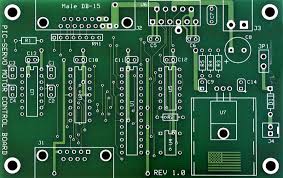
How are RF circuit boards used in antenna design?
Another vital aspect of RF circuit boards in antenna design is their role in supporting the physical structure and integration of the antenna onto the circuit board. In many modern wireless devices, such as smartphones, tablets, and IoT devices, the antenna is integrated directly onto the RF circuit board. This integration helps reduce the overall size of the device and improves performance by ensuring that the antenna is positioned optimally for efficient signal transmission and reception. For example, in some designs, a printed circuit board (PCB) is used to create a planar antenna, where the antenna is etched directly into the surface of the board. This approach allows for compact designs without compromising the functionality of the antenna, making it ideal for small and portable wireless devices.
RF circuit boards also facilitate the tuning of antennas to specific frequencies or applications. Tuning refers to adjusting the antenna’s resonance frequency to ensure that it operates efficiently at the desired frequency band. This is especially important in multiband and wideband antenna designs, where the antenna needs to perform well over a wide range of frequencies. The RF circuit board enables the inclusion of adjustable components such as inductors, capacitors, and varactors, which allow the antenna to be fine-tuned for optimal performance across various frequencies.
Furthermore, RF circuit boards support the antenna’s ability to handle different signal power levels and radiation patterns. For example, in directional antennas, such as those used in point-to-point communication, the RF circuit board’s design helps guide the signal in a specific direction to improve the antenna’s range and efficiency. In contrast, omnidirectional antennas, which are designed to radiate signals in all directions, benefit from RF circuit board layouts that ensure uniform signal distribution.
In addition to supporting antenna design, RF circuit boards also aid in the testing and optimization of antennas. Engineers use the RF circuit board to prototype and test antenna designs in real-world conditions, allowing them to assess the antenna’s performance, efficiency, and radiation characteristics. The board can also be equipped with test points and diagnostic tools to measure parameters such as return loss, radiation pattern, and antenna gain, helping to fine-tune the design before final implementation.
In conclusion, RF circuit boards play a vital role in antenna design by enabling efficient signal routing, impedance matching, integration, tuning, and optimization. The design of the RF circuit board directly influences antenna performance, impacting key factors like signal strength, frequency response, and radiation efficiency. As wireless communication technologies continue to evolve, RF circuit boards will remain crucial in ensuring that antennas meet the demands of modern wireless systems, enabling reliable and high-performance communication across a variety of applications.