
Last Updated:
Holi 2025 Date: Know the Holi 2025 date, Holika Dahan puja timings, its historical significance, and rituals associated with this vibrant festival in India.
Holi 2025: The shubh muhurat for Holika Dahan is 11:26 PM on March 13 to 12:48 am on March 14. (Image: Shutterstock)
Holika Dahan 2025: Holi is just around the corner, and we can’t wait to celebrate the festival of colours with our loved ones. It is among India’s most celebrated festivals, observed with a lot of joy and enthusiasm.
The two-day celebration begins with Choti Holi or Holika Dahan, followed by Dhulandi, also known as Rangwali Holi. The festival symbolises the victory of good over evil and is celebrated during the Hindu month of Phalgun, usually falling between February and March.
On this day, people come together to play with colours, water balloons and flowers. Both children and adults smear each other with gulal or abir — traditional coloured powders — while also seeking blessings from elders, making it a festival of joy and togetherness. According to Drik Panchang, the shubh muhurat for Holika Dahan is 11:26 PM on March 13 to 12:48 am on March 14.
Holi 2025: Date and Puja Timings
This year, Holi will be celebrated on Friday, March 14, 2025, while Holika Dahan will take place a day earlier, on Thursday, March 13, 2025.
As per Drik Panchang, the auspicious timings for the festival are as follows:
- Purnima Tithi begins at 10:35 AM on March 13, 2025
- Purnima Tithi ends at 12:23 PM on March 14, 2025
Holika Dahan Shubh Muhurat
- March 13: 11:26 PM to 12:48 AM (March 14)
- Duration: 01 Hour 21 Mins
Holi 2025: History
Holi is a festival that honours the union of Lord Krishna and Radha, as well as the victory of good over evil. It is also a harvest festival, marking the end of winter and the arrival of spring.
According to Hindu mythology, Lord Krishna had a dark complexion, whereas Radha was exceptionally fair. Krishna often worried whether Radha would accept him due to their differing skin tones and frequently expressed his concerns to his mother, Yashoda.
ALSO READ: When Is Holi 2025? Date, Rituals, History, Significance, And Celebrations Across India
At one point, Yashoda playfully suggested that Krishna paint Radha’s face a different colour to eliminate any perceived differences. Following his mother’s advice, Krishna smeared Radha’s face with gulal, giving rise to the Holi tradition.
Another legend associated with Holi is the tale of King Hiranyakashipu, his son Prahlad — a devoted follower of Lord Vishnu — and his demoness aunt, Holika. According to this myth, Hiranyakashipu was a tyrannical demon king who demanded worship from all.
ALSO READ: Holi 2025 Gift Guide: From Gujiya To Hampers, Make Your Celebration Memorable With These Special Gifts
But Prahlad remained steadfast in his devotion to Vishnu. So, Holika attempted to burn Prahlad alive by tricking him into sitting on a pyre with her. But due to divine intervention, she perished instead, while Prahlad emerged unharmed.
To commemorate the triumph of good over evil, Holika Dahan is observed on the evening before Holi.
Holika Dahan Significance
The significance of Holika Dahan extends beyond its legendary origins. As a powerful reminder of the eternal struggle between good and evil, it encourages people to uphold moral values and resist temptation and wrongdoing.
ALSO READ: Holi Outfit Ideas 2025: Best Outfit Ideas To Look Stylish And Stay Comfortable For Holi Celebrations
The ritual of burning Holika’s effigy serves as both a spiritual cleansing and a preparation for the Holi celebrations, symbolising the purification of the mind and soul.
Additionally, Holika Dahan marks the transition from winter to spring and is deeply linked to the agricultural cycle.
The bonfire acts as a symbolic offering for a prosperous harvest, invoking the gods’ blessings for abundance and success in the year ahead.
Holika Dahan Rituals
- Holika Dahan is marked by sacred rituals and deep symbolism.
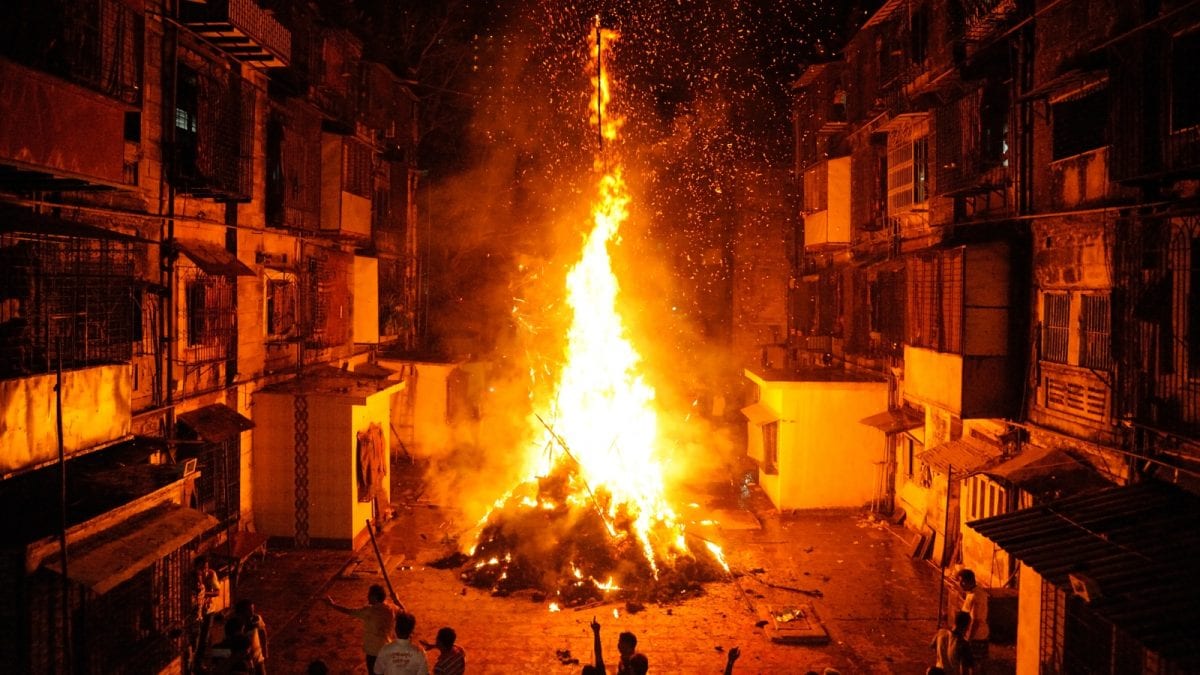
- The ceremony centers around a bonfire made from wood, twigs, and other combustible materials. An effigy of Holika, representing evil, is placed atop the pyre.
- As the fire is lit, Vedic mantras and prayers are chanted to invoke divine blessings and cleanse the surroundings.
- Devotees walk around the fire, signifying the victory of good over evil, while offering grains, coconuts, and other items as a gesture of gratitude and devotion.
- The ashes from the bonfire are believed to possess protective properties and are often applied as a symbol of safeguarding.
- Holika Dahan brings people together in joy and unity, paving the way for the colourful celebrations of Holi.