
Piano Transcriptions
Guitar and piano transcriptions are used for a wide range of purposes. Often they’re created in order to teach students pieces of music. They can also be used to help composers recreate a musical piece for different instruments or even for use as a basis for orchestral arrangements. It’s quite common for pieces of classical music to be transcribed for other instruments, especially when there are differences between the instrumentation such as with string quartets and full orchestras. The transcribing process is a great way to develop and test your musical intuition and knowledge of scales and key signatures. This is a good skill to practice if you’re planning on becoming a professional musician in any genre.
Transcription can be hard work and it can be easy to get carried away with the technical elements of the process. You need to be able to listen carefully and form an accurate picture of what is being played, as well as understand the limitations of your instrument(s). For example, when transcribing for guitar it’s important to consider that the human hand can only move up or down four frets at once. Chords with many stops should be avoided where possible and chord changes should be kept to a minimum.
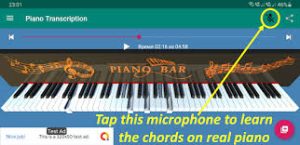
In addition, the guitar is limited in it’s range compared to the piano. This can make some piano pieces seem impossible to transcribe for the guitar. However, if you keep a few things in mind you can overcome this issue. First, be sure that you have a good pair of headphones and that you’re listening to the original recording at a reasonable volume.
https://tartalover.net/nicole-pesce
Guitar and Piano Transcriptions
If the recording is too loud you won’t be able to hear what you’re transcribing. If it’s too soft you may miss out on some of the bass notes. It’s also useful to have a digital recorder or similar device with you so that you can easily play back the transcription. This will help to spot mistakes and inaccuracies in your work.
https://m.youtube.com/@tartalover2682/videos
Another useful tool is a software program or app that slows down the recording for you, making it much easier to listen and understand what is being played. This can be particularly helpful for more complicated songs or when the song is in a different key than you are used to playing. A lot of these programs also allow you to loop sections of the song, which can be helpful for finding a particular chord or melody line.
It’s always a good idea to begin transcribing simple pieces of music before working up to more complex ones. A good rule of thumb is that the more chords, syncopation and polyrhythms there are in a piece, the more difficult it will be to transcribe. Ideally you’ll want to start with something diatonic, which means the song sticks within a set key and doesn’t jump between keys. This will make the transcription process much less daunting and will give you a solid foundation to build on.